
SCHOOL
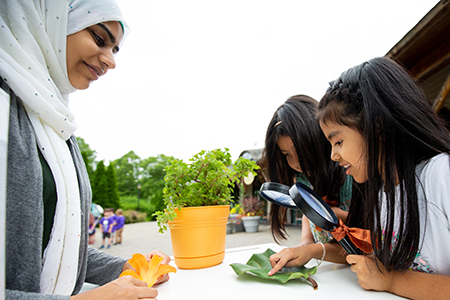
School groups can enjoy programming in the Everett Children’s Adventure Garden, Ruth Rea Howell Family Garden in the Edible Academy, and GreenSchool. Students will engage in experiences with nature that will help them to understand plants, their cultural usage, and their importance to life on Earth. Hands-on activities include conducting seed germination experiments, potting edible plants, creating nature inspired art, and building terrarium experiments. NYC Public Schools receive free grounds access!
supports classroom learning in:
Environmental Studies, Science.
topics covered:
Environmental Science, Ecology, Ecosystems, Biology, Living Environment, Botany, Plants, Water Cycle, Pollination, Seeds, Plant Adaptations, Photosynthesis.
contact info
Name: Registration Office.
Phone: 718-817-8181
Email: [email protected]
INFO
ABOUT
New York Botanical Garden
As a National Historic Landmark, the New York Botanical Garden’s 250-acre verdant landscape supports over one million living plants in extensive collections—from tropical and desert plants inside the Enid A. Haupt Conservatory, to a real old-growth forest and wetlands. The Garden is a major educational institution that teaches plant science, ecology, and healthful eating through hands-on, curriculum-based programming.
contact info
Hrs: Tues.-Sun. 10AM-6PM.
HELPFUL LESSON PLAN(S)
Prepared by FieldTripDirectory.com
Botanical Garden Lesson Plan
FUN FACTS
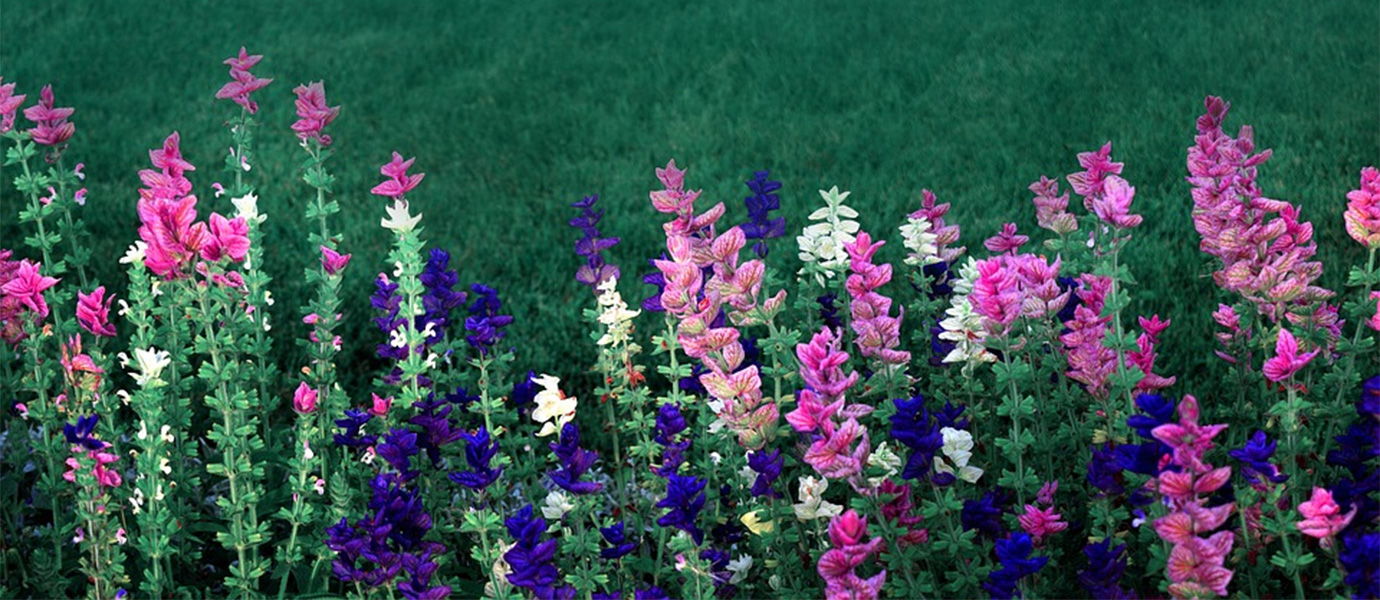
The diverse world of plants is perhaps the weirdest, and most fascinating, of all living things. Bamboo can grow over three feet in one day (you can literally watch it grow). There are 600 species of carnivorous plants, which trap and digest insects, frogs, or small birds (if a vegetarian eats this plant, are they still a vegetarian?). The world’s largest flower, Rafflesia, can grow up to three feet in diameter (how big would a bouquet be…). Do a little digging on your next trip to a botanical garden (not literally!), and see what interesting plant facts you can find.
View Lesson Plan>>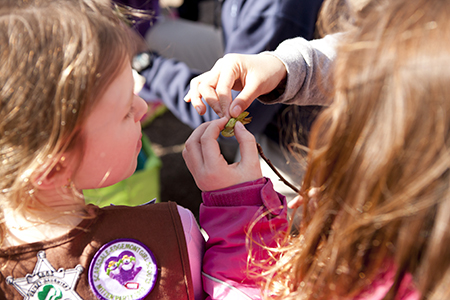
SCOUTS
Scout groups can enjoy programming in the Everett Children’s Adventure Garden, Ruth Rea Howell Family Garden in the Edible Academy, and GreenSchool. Scouts can work on nature badges and partake in outdoor nature walks that will introduce them to native plants, forest ecology, ecosystems, and more. NYC Scout Groups get free grounds access!
supports scout badges in:
Environmental Science, Science.
topics covered:
Environmental Science, Ecology, Ecosystems, Biology, Living Environment, Botany, Plants, Water Cycle, Pollination, Seeds, Plant Adaptations, Photosynthesis.
contact info
Name: Registration Office.
Phone: 718-817-8181
Email: [email protected]
INFO
ABOUT
New York Botanical Garden
As a National Historic Landmark, the New York Botanical Garden’s 250-acre verdant landscape supports over one million living plants in extensive collections—from tropical and desert plants inside the Enid A. Haupt Conservatory, to a real old-growth forest and wetlands. The Garden is a major educational institution that teaches plant science, ecology, and healthful eating through hands-on, curriculum-based programming.
contact info
Hrs: Tues.-Sun. 10AM-6PM.
HELPFUL LESSON PLAN(S)
Prepared by FieldTripDirectory.com
Botanical Garden Lesson Plan
FUN FACTS
The diverse world of plants is perhaps the weirdest, and most fascinating, of all living things. Bamboo can grow over three feet in one day (you can literally watch it grow). There are 600 species of carnivorous plants, which trap and digest insects, frogs, or small birds (if a vegetarian eats this plant, are they still a vegetarian?). The world’s largest flower, Rafflesia, can grow up to three feet in diameter (how big would a bouquet be…). Do a little digging on your next trip to a botanical garden (not literally!), and see what interesting plant facts you can find.
View Lesson Plan>>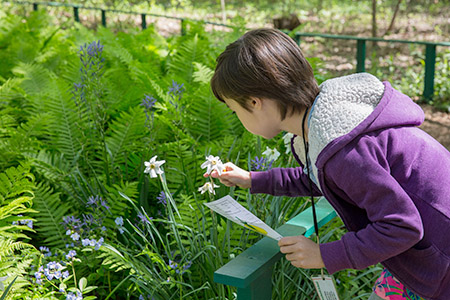
HOMESCHOOL
Homeschool groups can enjoy programming in the Everett Children’s Adventure Garden, Ruth Rea Howell Family Garden in the Edible Academy, and GreenSchool. Homeschoolers will learn about nature through a variety of hands-on activities such as observing plants on sensory walks, conducting an experiment about photosynthesis, and potting rainforest plants to grow at home. The programs are a great supplement for homeschool environmental studies curriculums.
supports classroom learning in:
Environmental Studies, Science.
topics covered:
Environmental Science, Ecology, Ecosystems, Biology, Living Environment, Botany, Plants, Water Cycle, Pollination, Seeds, Plant Adaptations, Photosynthesis.
contact info
Name: Registration Office.
Phone: 718-817-8181
Email: [email protected]
INFO
ABOUT
New York Botanical Garden
As a National Historic Landmark, the New York Botanical Garden’s 250-acre verdant landscape supports over one million living plants in extensive collections—from tropical and desert plants inside the Enid A. Haupt Conservatory, to a real old-growth forest and wetlands. The Garden is a major educational institution that teaches plant science, ecology, and healthful eating through hands-on, curriculum-based programming.
contact info
Hrs: Tues.-Sun. 10AM-6PM.
HELPFUL LESSON PLAN(S)
Prepared by FieldTripDirectory.com
Botanical Garden Lesson Plan
FUN FACTS
The diverse world of plants is perhaps the weirdest, and most fascinating, of all living things. Bamboo can grow over three feet in one day (you can literally watch it grow). There are 600 species of carnivorous plants, which trap and digest insects, frogs, or small birds (if a vegetarian eats this plant, are they still a vegetarian?). The world’s largest flower, Rafflesia, can grow up to three feet in diameter (how big would a bouquet be…). Do a little digging on your next trip to a botanical garden (not literally!), and see what interesting plant facts you can find.
View Lesson Plan>>